Reviewed and updated: October 17, 2026
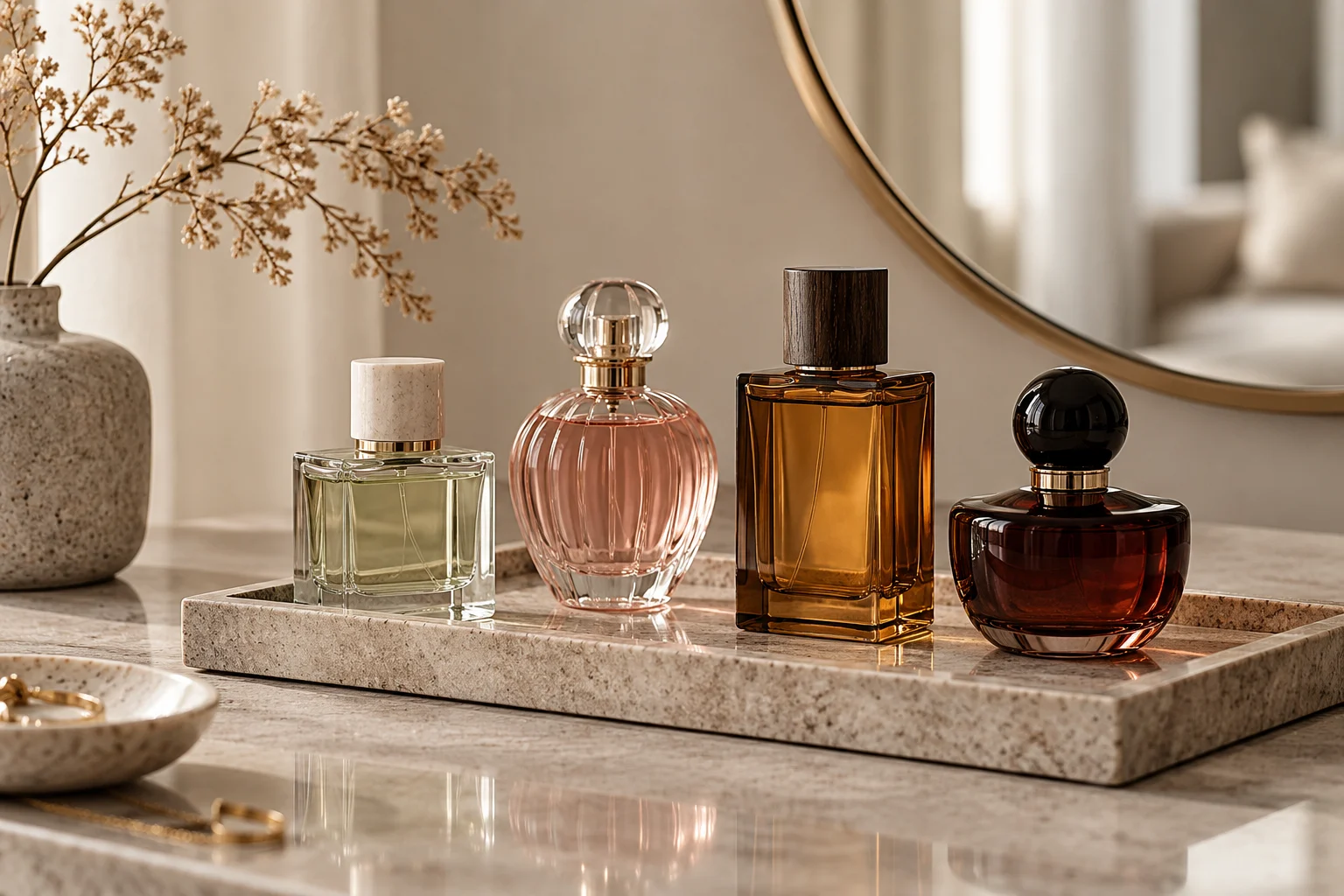
A useful fragrance wardrobe covers situations rather than collecting duplicates. Begin with what you already wear, test on skin, and add one distinct role at a time.
Audit what you already own
Gather bottles, samples, and decants in one place. Record name, concentration, approximate age, condition, and the last time you wore each one. Group by how they smell to you rather than by marketing category. Several sweet amber fragrances may fill the same role even when one is sold for daytime and another for evening. Set aside anything that smells altered, leaks, irritates skin, or is no longer enjoyable. The goal is clarity, not a larger shelf.
Define real situations
List the settings that occur in your life: work, casual weekends, warm weather, cold weather, formal events, close indoor spaces, and travel. You may need only three roles, not seven. A quiet fresh scent can cover work and summer; a textured woody scent can cover cool evenings; a favorite floral or amber can provide personality. Avoid buying a category because a checklist says it is essential. A wardrobe should reflect where you go and how strongly you like to smell.
Identify gaps, not trends
Compare the situations with the bottles you reach for. A gap exists when you repeatedly avoid wearing fragrance because everything feels too heavy, too sharp, too formal, or too similar. A viral note or new release is not automatically a gap. Write a plain-language brief such as low projection, citrus without sweetness, or warm woods without smoke. That brief makes sampling efficient and protects you from purchasing another version of a profile already sitting unused.
Sample on paper and skin
Use blotter paper to screen several options, then test finalists on clean skin on separate days. Skin chemistry, temperature, moisturizer, and environment affect perception. Smell at the opening, after thirty minutes, and several hours later. Do not rub wrists together. Keep the number of tests low enough to avoid fatigue, and step into fresh air between samples. Record longevity and comfort without assuming a fragrance must last all day to be useful.
Check concentration and dose
Eau de toilette, eau de parfum, parfum, and cologne labels describe concentration traditions but do not guarantee projection or wear time across brands. Judge the formula itself. A strong scent used sparingly may cover an evening role, while a softer fragrance can suit close spaces. Test the number of sprays you would genuinely wear. Compliments are not a safety test; headaches, coughing, skin reactions, workplace policies, and other people’s space should guide restraint.
Buy the smallest sensible size
A sample or decant can reveal whether enjoyment survives repeated wear. A travel spray may be enough for a seasonal or formal scent. Full bottles make sense when the cost per use and storage plan fit actual use. Verify the seller, packaging, batch information where appropriate, and return policy. Avoid buying backup bottles before understanding how a fragrance ages in your conditions. Money saved per milliliter is not savings when most of the bottle remains unworn.
Store the wardrobe well
Keep bottles upright in a cool, dry, dark location with stable temperature. Bathrooms, sunny windows, hot cars, and radiator shelves expose fragrance to heat and light. Keep caps and atomizers clean and close bottles promptly. Original boxes can add light protection but do not correct poor temperature. Label samples and decants clearly. If the smell, color, or spray changes, compare carefully with prior notes instead of applying a large dose to determine whether it is still good.
Use a one-in review
When a new fragrance enters, review the role it fills and whether another bottle has become redundant. You do not need to discard something automatically; rotate seasonally, gift only safe authentic products, or finish a small amount. Track wears for a month. The ideal wardrobe is not a fixed number but a group where each bottle earns attention. A small collection feels varied when the profiles and use cases are distinct, and it stays manageable because new purchases must answer a real need.
Quick checklist
- List actual use situations.
- Group current bottles by smell and role.
- Write a gap brief before sampling.
- Test finalists on separate skin-wear days.
- Buy the smallest practical size.
- Store bottles cool, dark, dry, and upright.
Why these checkpoints matter
- List actual use situations. This defines the starting condition and prevents the rest of the process from resting on an assumption.
- Group current bottles by smell and role. This narrows the choice to evidence you can verify on the exact label, model, or scene.
- Write a gap brief before sampling. This checkpoint reduces avoidable risk before another variable is introduced.
- Test finalists on separate skin-wear days. This keeps the routine compatible with the person, product, material, or equipment involved.
- Buy the smallest practical size. This creates a repeatable step instead of relying on memory or marketing language.
- Store bottles cool, dark, dry, and upright. This final review catches changes in condition, availability, or instructions before the next use.
Common questions
How many fragrances make a wardrobe?
There is no required number. Three distinct, well-used options can cover more situations than ten similar bottles.
Should every season have a separate scent?
Only if seasonal changes affect what you enjoy. One versatile fragrance may work year-round with adjusted application.
Are samples worth buying?
They can prevent an unsuitable full-bottle purchase and provide several complete wears, which is more useful than a quick counter test.
Keep the decision useful
Write down the exact model, label, starting condition, and result. Change one variable at a time and return to the official instructions when anything is unclear. A short record makes the next decision easier and keeps an isolated result from becoming a rule that does not fit a different product, person, material, or environment.
Review the information again before repeating the process. Stop when comfort, safety, condition, or the manufacturer’s instructions provide a reason to stop. A useful routine stays simple because every step answers a real question.