
Reviewed and updated: October 21, 2026
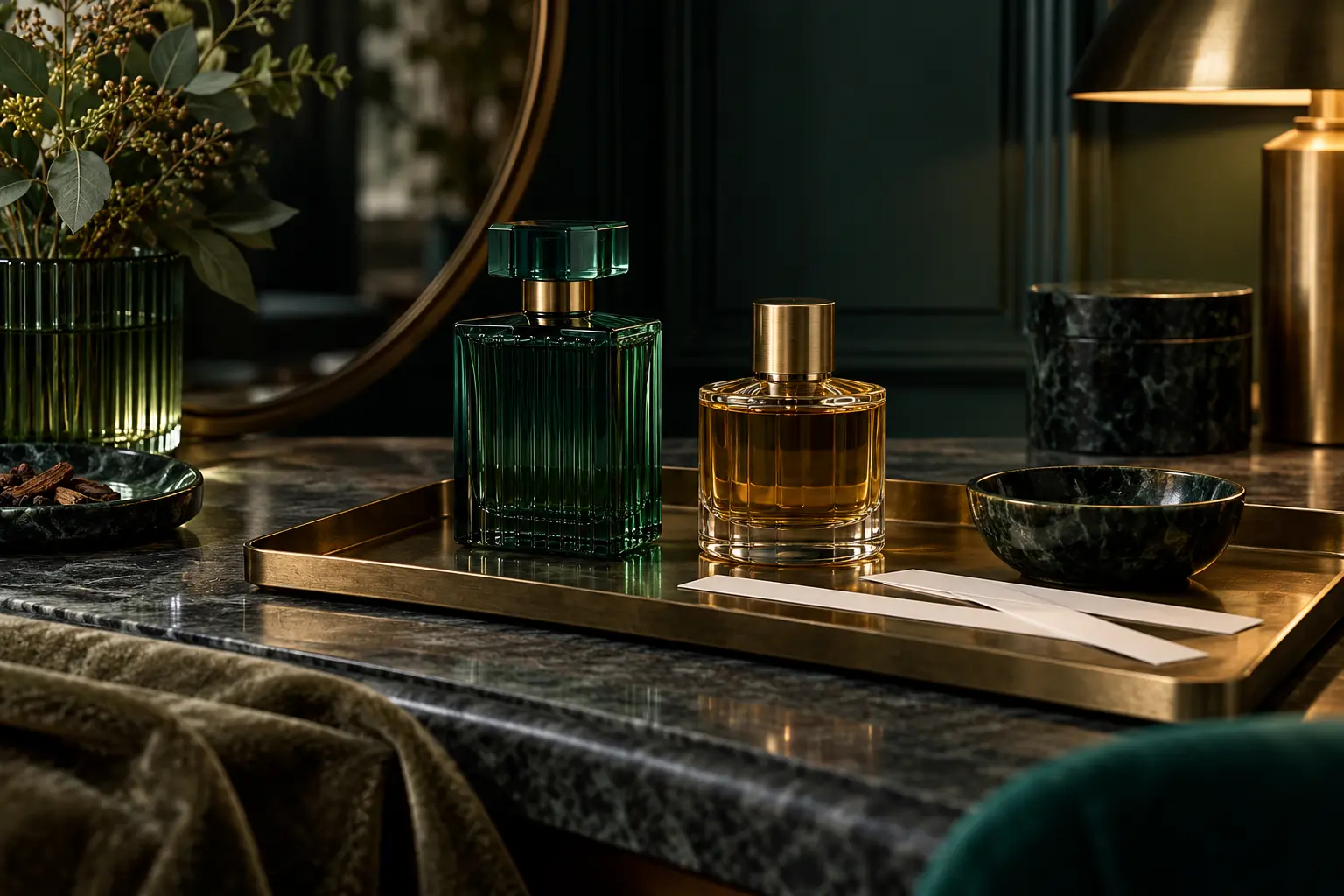
Fragrance layering works best as a controlled comparison: two compatible products, small amounts, and enough time to understand how the combination develops on skin.
Know what layering changes
Layering combines opening, heart, base, strength, and wear time; it does not simply add two note lists. One fragrance may dominate early and another may appear later. Skin, climate, fabric, and application amount change the result. Treat each blend as a new wearing rather than expecting the bottles to behave independently.
Choose a simple anchor
Start with one fragrance you already understand. A clean musk, soft wood, gentle citrus, or straightforward vanilla can be easier to pair than a dense composition with many strong facets. Add one partner that shares a note or supplies a deliberate contrast. Avoid three or four unknown scents in the first test.
Test on separate blotters first
Spray each fragrance on its own blotter and a third blotter with the planned sequence. Label them and smell from a short distance at several intervals. Blotters do not predict skin perfectly, but they reveal clashes and overwhelming strength without covering both arms in a combination that needs hours to fade.
Control dose and order
Use fewer sprays than you would for each fragrance alone. Apply the stronger or longer-lasting scent lightly, then add the softer scent after a short pause. Test the reverse order on another day. Do not rub the application points, because friction and transfer make the comparison less consistent.
Use skin space, not a wet pile
Two nearby but separate application points can create an overall blend while letting you identify each part. Spraying repeatedly onto one wet spot makes evaluation harder and can increase irritation. Keep fragrance away from broken or recently shaved skin, and stop if redness, burning, headache, breathing discomfort, or nausea develops.
Give the combination a full wear
Judge the opening, then revisit after thirty minutes, several hours, and near the end of wear. A bright pairing may become too sweet or heavy as the base develops. Record the products, order, spray count, weather, and result. Repeat only after you understand what needs changing.
Coordinate scented body products
Lotion, hair products, detergent, and deodorant already contribute scent. An unscented base makes a perfume pairing easier to read. If you intentionally use a scented lotion, count it as part of the blend. Follow its skin directions and avoid assuming that matching marketing names mean identical ingredients or concentration.
Build a small reliable wardrobe
Keep two or three tested combinations for specific settings instead of mixing randomly every morning. Store bottles upright, cool, and dark, and use clean atomizers when decanting is permitted. A successful layer should still feel recognizable, comfortable, and appropriate to the space rather than announcing how many products were used.
Quick checklist
- Start with one familiar anchor.
- Compare on labeled blotters.
- Use fewer sprays than usual.
- Test sequence on different days.
- Allow a full dry-down.
- Record combinations that work.
Why these checkpoints matter
- Start with one familiar anchor. This defines the starting condition and prevents the rest of the process from resting on an assumption.
- Compare on labeled blotters. This narrows the choice to evidence you can verify on the exact label, model, or scene.
- Use fewer sprays than usual. This checkpoint reduces avoidable risk before another variable is introduced.
- Test sequence on different days. This keeps the routine compatible with the person, product, material, or equipment involved.
- Allow a full dry-down. This creates a repeatable step instead of relying on memory or marketing language.
- Record combinations that work. This final review catches changes in condition, availability, or instructions before the next use.
Common questions
Which fragrance goes on first?
There is no universal rule. Start lightly with the stronger or longer-lasting scent, then test the reverse order another day.
Can I layer three perfumes?
You can, but two products are easier to evaluate and less likely to become muddy or overpowering.
Does unscented lotion help?
It can reduce competing scent and may change wear, but use only a skin-compatible product and test the final combination.
Keep the decision useful
Write down the exact model, label, starting condition, and result. Change one variable at a time and return to the official instructions when anything is unclear. A short record makes the next decision easier and keeps an isolated result from becoming a rule that does not fit a different product, person, material, or environment.
Review the information again before repeating the process. Stop when comfort, safety, condition, or the manufacturer’s instructions provide a reason to stop. A useful routine stays simple because every step answers a real question.